
Guide · 20 November 2026 · 8 min
Real Zari, Tested Zari and Imitation Zari: A Retailer's Guide
What real, tested and imitation (metallic) zari are made of, how each one looks and ages, how to tell them apart at your counter, and how to label zari sarees honestly.
Quick answer
- Real zari is usually fine silver wire on a silk core, plated with gold. It is the heaviest and costliest, and is found mostly in handloom pure silk sarees.
- Tested zari has a copper wire in place of silver, electroplated with silver and a gold colour. It looks close to real zari at a much lower price.
- Imitation or metallic zari is a thin metallised polyester film. It is the lightest and cheapest, and it does not tarnish.
- To tell them apart, look at the colour in daylight, scratch a loose thread end, and, on one loose thread only, try a careful burn test. For proof, use a testing lab.
- "Gold", "silver" and "copper" zari in a listing usually describe the colour, not the metal. Label what the zari is made of only when you know.
Zari is the metallic thread woven into a saree's border, pallu and motifs. It comes in three kinds. Real zari is made with silver and gold. Tested zari uses copper coated with silver and a gold colour. Imitation zari, also called metallic zari, is a metallised polyester film. All three can look gold on the shelf, but they differ in weight, in how they age, and in price.
Customers rarely ask which kind they are buying, but they remember if they were told wrongly. Here is how we explain the difference to buyers at our Surat factory, with simple checks you can do yourself and advice on labelling honestly.
How zari is made
All zari is built the same way: a flattened metal or metallic strip is wound tightly around a core yarn. As the Wikipedia article on zari describes, that strip can be pure gold or silver, or slit metallised polyester film, and the core can be silk, viscose, cotton, nylon or polyester. What changes from one kind to the next is the metal, and that decides everything else.
Surat, where our factory is, has made zari for generations. The Surat zari craft received a Geographical Indication tag in 2010.
Real, tested and imitation zari compared
This table is the whole difference in one view. The price levels are relative; actual prices move with the price of silver and gold.
| Real (pure) zari | Tested zari | Imitation (metallic) zari | |
|---|---|---|---|
| Made of | Silver wire on a silk core, plated with gold | Copper wire, electroplated with silver, then a gold colour | Metallised polyester film on a polyester or viscose core |
| Look when new | Warm, soft glow, slightly muted | Close to real zari, sometimes a little brassy | Bright, even, mirror-like shine |
| How it ages | Darkens slowly and evenly over years | Plating can wear at folds, showing a reddish copper tone | Does not tarnish; can flatten, crack or lose shine |
| Weight | Heaviest | Medium | Lightest |
| Loose-thread burn test | Core burns, white-grey metal wire remains | Core burns, reddish copper wire remains | Melts into a hard bead, smells like burning plastic |
| Typical sarees | Handloom pure silk Banarasi, Kanchipuram and other heirloom sarees | Mid-range silk sarees and better powerloom wedding sarees | Most powerloom soft silk, art silk, cotton silk and fancy sarees |
| Price level | Highest | Middle | Lowest |
One warning on names: the trade does not use them consistently. Some sellers and some sources call tested zari "imitation zari" too, and "half-fine" is another name for it. When a supplier says "imitation", ask whether they mean copper-based or polyester-based.
Real zari: silver and gold
Real zari, often called pure zari, is usually fine silver wire flattened and wound on silk, then electroplated with gold. Its glow is softer than people expect: warm and slightly muted, not glittery. It is heavy in the hand, and a saree with a lot of it feels noticeably weighty.
Over years, real zari darkens slowly and evenly because of the silver. Old real-zari sarees usually still have value for the metal in them, which is why families keep them. You will find real zari mainly in handloom pure silk sarees from Banaras, Kanchipuram and other weaving centres, at the top of the price range.
Tested zari: copper with a silver and gold finish
Tested zari replaces the silver wire with copper. The copper is electroplated with silver and then given a gold colour, so when new it looks close to real zari. It costs far less, which is why many mid-range silk sarees and better wedding sarees use it.
The difference shows with age. Where the saree is folded or rubbed, the thin plating can wear away and a reddish copper tone comes through. In damp storage it can darken unevenly. Good storage, folded in muslin and refolded every few months, slows this down.
Imitation or metallic zari: polyester film
Metallic zari is a very thin polyester film with a metallic coating, slit into narrow strips and wound on a core yarn. It contains no silver, gold or copper. It is light, soft, comes in any colour, and does not tarnish, so it suits the large volumes and wide colour ranges that retailers need.
Its shine is bright and even, sometimes almost mirror-like. With heavy use it can flatten, crack at folds or lose some shine, and a hot iron directly on the zari can damage it. Most powerloom soft silk, art silk, cotton silk and fancy sarees in the Indian market use metallic zari.
Gold, silver and copper are usually colours
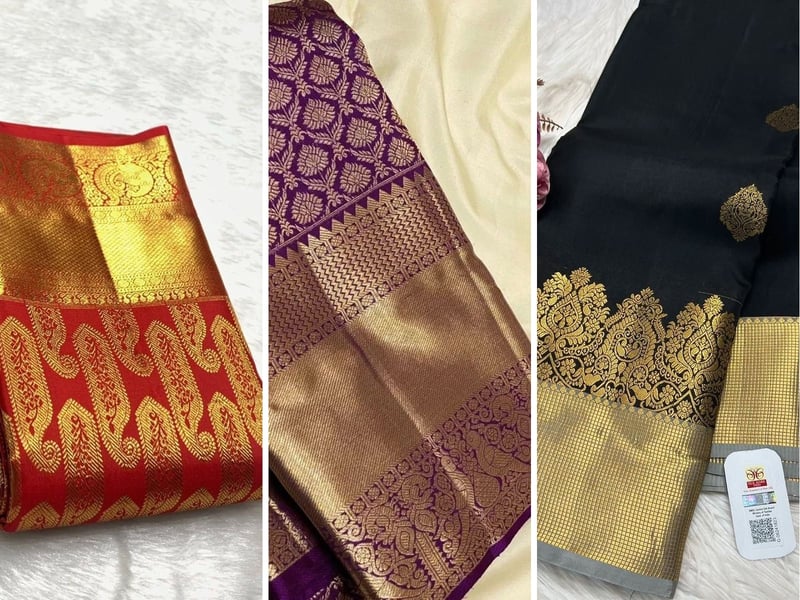
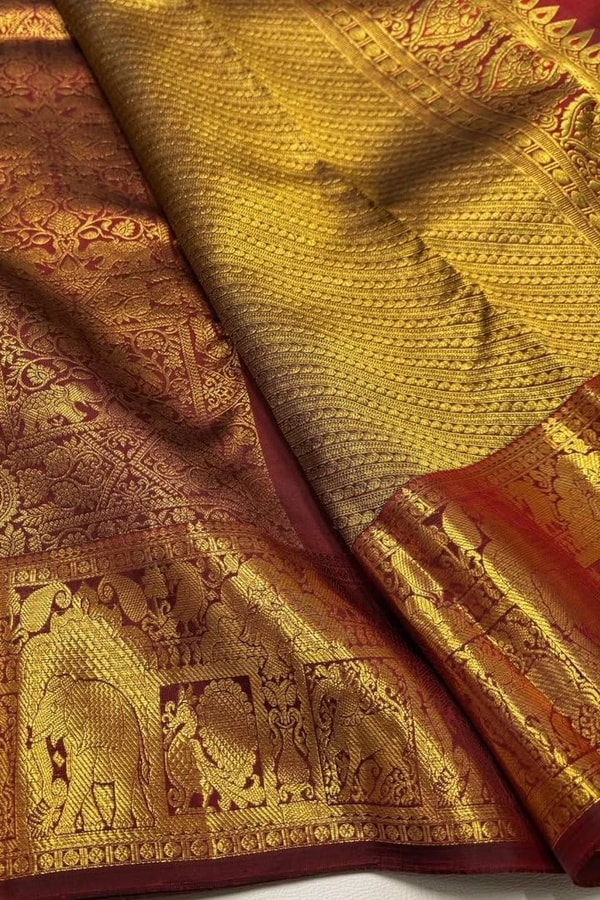
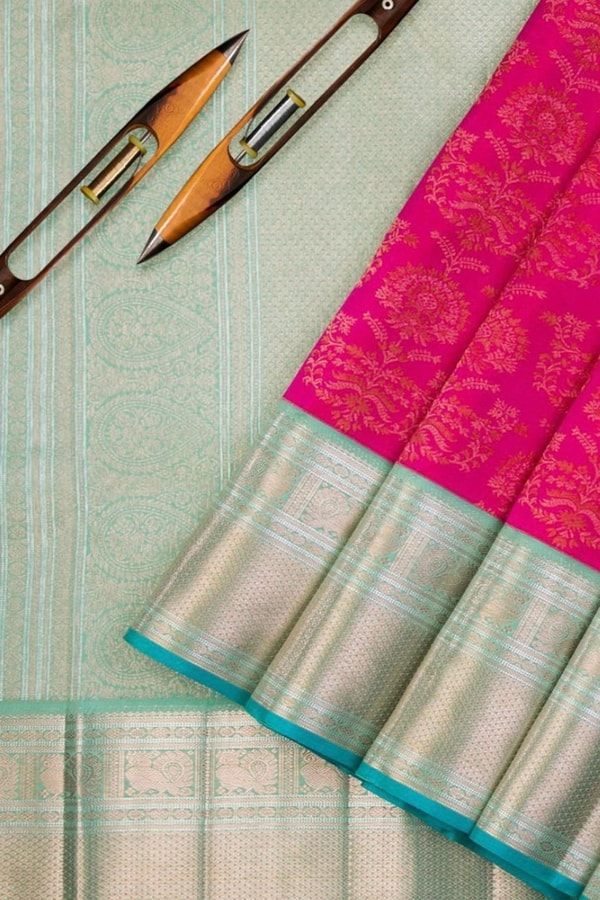
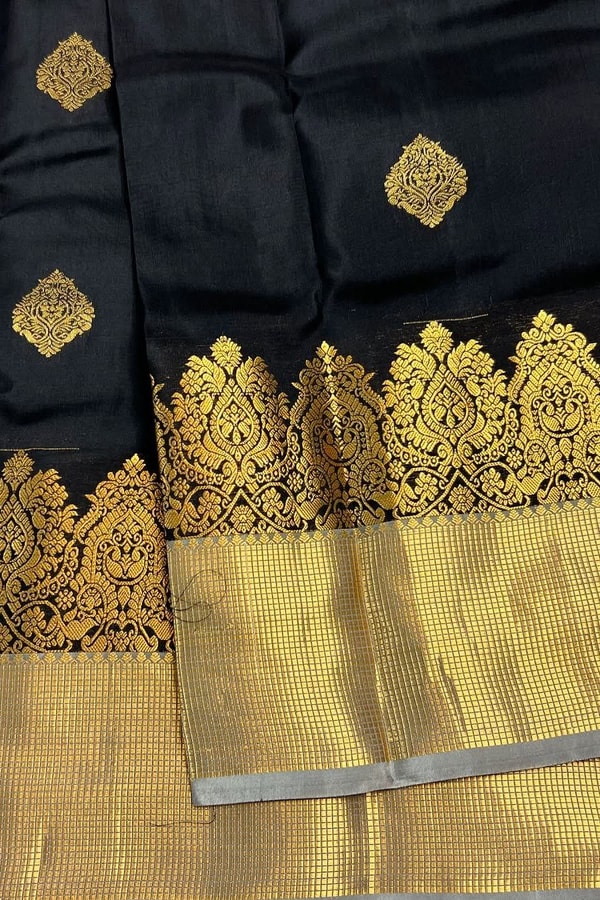
When a listing says gold zari, silver zari or copper zari, it usually means the colour of the thread, not the metal inside. The same metallic or tested zari can be made in all three colours. The three sarees below show the colours; none of them is real silver-and-gold zari.

How to check a saree's zari
Start with the easy checks and go further only when the answer matters, for example when a saree is sold as pure zari. These six steps are what we would do ourselves.
- Read the label and invoice A real-zari claim should be written on the bill. If it is not written, do not repeat it to your customer.
- Feel the weight Compare sarees of the same fabric and size. More zari, and real zari, add weight, so a light saree with a lot of shine is usually metallic.
- Look in daylight Take it to a window, away from shop lights. Real zari glows softly; metallic zari looks bright and even, almost like foil.
- Check the reverse and a loose end Find a loose zari thread inside the fall or blouse piece. Under a magnifier, real zari shows a metal wire around a silk core; metallic zari looks like a flat film.
- Scratch the thread end Scrape a loose end gently with a pin. White-grey metal under the gold suggests silver; a reddish colour suggests copper, which means tested zari.
- Burn one loose thread, carefully See the safety note below. For a firm answer, send a sample to a jeweller or a testing lab.
The burn test, done safely
The burn test is old and still useful, but do it with care. Use one short loose thread, a few centimetres long, pulled from an inside edge or an offcut. Never test on a saree a customer has bought, and never near your stock.
Hold the thread with tweezers over a steel plate, with water nearby, and touch a lit match to the end. Metallic zari melts and curls into a hard bead and smells like burning plastic. Real or tested zari leaves the metal wire behind after the core burns away: white-grey usually means silver, reddish usually means copper. The result is a strong hint, not proof.
From our factory: Keep one offcut of each zari type in a labelled envelope at your counter. Showing a customer the difference side by side in daylight builds more trust than any description.
How to label zari sarees honestly
Describe what you know and nothing more. If the zari type is not on the invoice, write "zari weaving" or "gold-colour zari", not "pure zari" or "real zari". Use "tested zari" only when your supplier confirms it.
Our own Banarasi soft silk sarees are Banarasi-style sarees woven on modern looms in Surat. They are not handloom, not GI-tagged Banarasi silk, and their zari is not real silver-and-gold zari. Sell them as Banarasi soft silk with zari weaving. If you need to know whether a particular design uses tested or metallic zari, ask us before you order and we will tell you for that quality.
Our earlier posts on Banarasi and Kanchipuram styles and on saree fabrics help with the rest of the label. For zari-rich designs for the season, see our wedding sarees, or contact us to see the zari in daylight at our factory.
Frequently asked questions
What is the difference between real zari and tested zari?
Real zari is usually silver wire wound on silk and plated with gold. Tested zari uses copper wire in place of silver, electroplated with silver and given a gold colour. When new they look similar, but tested zari costs much less, and over time its plating can wear at folds and show a reddish copper tone.
Does imitation zari turn black?
Metallic zari made from polyester film does not tarnish, because it contains no silver or copper. It can lose shine, flatten or crack at folds with heavy use, and a hot iron can damage it. Tested zari, which has a copper core, is the type that can darken or show a reddish colour as it ages.
How can I check if a saree has real zari at home?
Look at the zari in daylight, feel the weight against a similar saree, and scratch a loose thread end with a pin to see if the metal under the gold is white or reddish. A careful burn test on one loose thread gives a further hint. For proof, a jeweller or textile testing lab can test a small sample.
Is the zari in Banarasi soft silk sarees real?
Usually not. Banarasi soft silk sarees are Banarasi-style sarees woven on modern looms, and their zari is normally tested or metallic, not real silver and gold. That keeps them light and affordable. Real zari is found mainly in handloom pure silk sarees, at a much higher price.
What does copper zari mean in a saree listing?
In most listings, copper zari describes the colour of the thread: a warm, antique, reddish-gold tone. It does not usually mean the thread is made of copper. The same applies to gold zari and silver zari. If the metal matters to your customer, ask the supplier what the zari is made of.
Should I tell customers which zari a saree has?
Yes, when you know it, and say nothing you cannot back up. A customer told "zari weaving" is never disappointed, while a customer told "pure zari" about a metallic zari saree may never come back. Honest labels also protect your shop if a customer later has the zari tested.