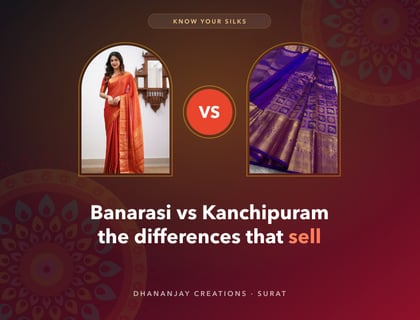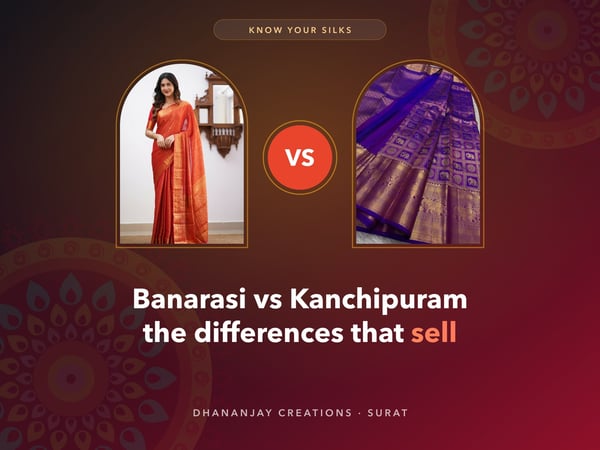
Banarasi and Kanchipuram are India's two best-known silk saree traditions. A Banarasi saree comes from Varanasi in Uttar Pradesh and is known for fine zari brocade with floral and Mughal-inspired motifs. A Kanchipuram (Kanjivaram) saree comes from Tamil Nadu and is known for heavier silk, bold contrast borders and temple, check and animal motifs.
For a retailer, knowing the difference is not just general knowledge. It decides which customer you show which saree to, how you describe it, and how you price it. Here is how we explain the two styles to the buyers who visit our factory in Surat.
Banarasi vs Kanchipuram at a glance
| Banarasi | Kanchipuram | |
|---|---|---|
| Home of the tradition | Varanasi (Banaras), Uttar Pradesh | Kanchipuram, Tamil Nadu |
| Signature look | Zari brocade, floral jaal, butta and paisley motifs | Wide contrast borders, temple, checks, peacock and elephant motifs |
| Border and pallu | Rich pallu, borders that flow from the body design | Bold border in a contrast colour, often with a contrast pallu |
| Feel and drape | Softer, lighter drape | Heavier, crisper silk that holds its shape |
| Typical buyers | Weddings and festivals across North and West India | Weddings, temple visits and festivals, especially in South India |
What makes a Banarasi saree
Banarasi weaving is known for brocade: patterns woven into the fabric with zari (metallic thread) so they stand slightly raised on the surface. Common motifs are small butta or butti scattered over the body, a floral jaal (net) covering the whole saree, creepers along the border and a heavily woven pallu. Much of this design language goes back to the Mughal period, which is why floral and paisley shapes appear so often.
What makes a Kanchipuram saree
Kanchipuram silk is woven heavier, and the border is the star. Traditional weavers often weave the body and the border separately and interlock them, which is why the border can be in a completely different colour from the body. Temple-tower borders, checks, stripes, mango (mangai), peacock and elephant motifs are typical. The result is a saree that looks grand from a distance, which is exactly why it is a bridal favourite.
Handloom originals and Surat-made versions: label them honestly
Handwoven Banarasi brocades and Kanchipuram silks are protected by Geographical Indication (GI) tags, and genuine handloom pieces take weeks to weave and are priced accordingly. Most shops also sell sarees that bring the same looks to more customers at everyday prices. That is what our Surat range does: Banarasi soft silk sarees woven with Banarasi-style zari motifs, and Kanchipuram-style designs with temple borders and contrast pallus, all made on modern looms in our factory.
Our advice to every retailer: describe these as "Banarasi soft silk" or "Kanchipuram-style", not as handloom or GI-tagged silk. Customers trust a shop that tells them exactly what they are buying, and they come back.
How to tell them apart in your shop
- Look at the border first. A wide border in a strong contrast colour, with temple shapes, points to a Kanchipuram style.
- Look at the body. Small zari butta, floral jaal or all-over brocade points to a Banarasi style.
- Feel the weight. Kanchipuram-style sarees feel crisper and fuller; Banarasi soft silk falls softly and is easy to drape.
- Check the pallu. Both have rich pallus, but Kanchipuram styles often switch to a contrast colour at the pallu.
Which should you stock?
If your customers buy for South Indian weddings and temple occasions, give the bigger share of your order to Kanchipuram-style sarees with temple borders and contrast pallus. For North and West Indian weddings and festivals, Banarasi styles usually sell faster. Most shops do best with both: Banarasi for variety of colours and price points, Kanchipuram styles for the bridal corner. Our wedding saree range mixes both.
Frequently asked questions
Is a Kanchipuram saree heavier than a Banarasi saree?
Traditionally, yes. Kanchipuram silk is woven heavier and crisper, while Banarasi sarees have a softer drape.
Can a saree be both Banarasi and Kanchipuram?
Many modern sarees mix the two: a Banarasi soft silk body with a Kanchipuram-style temple border, for example. Describe the fabric and the style separately so the customer knows what it is.
Do you make both styles?
Yes. We manufacture Banarasi soft silk and Kanchipuram-style sarees in Surat and sell them wholesale, from 20 pieces per design.
Want to compare the two in person? Contact us to visit the factory, or ask for photos and videos of any design on WhatsApp.