
Guide · 17 November 2026 · 9 min
How to Start a Saree Business from Home: A Wholesale Checklist
Selling sarees from home, on Instagram or WhatsApp? How to pick a niche, place a small first order, price for a real margin, handle GST and returns, with checklists from our Surat factory.

Quick answer
- Pick one niche: one kind of customer, one occasion, one price band.
- Start small: 20 to 40 pieces across 8 to 10 designs. Our minimum is 20 pieces in the whole order, any designs.
- Before you pay, ask the manufacturer about fabric, length, weight, photo use, GST invoice, dispatch and damage.
- Price from your full landed cost (saree, freight, packing, ads, returns), not from the purchase price alone.
- GST registration is generally needed once your turnover crosses the limit in the law, and earlier in some cases. Check with a CA before your first sale.
You can start a saree business from home with a phone and a small first order. Choose one kind of customer, buy 3 or 4 designs at 20 pieces each in mixed colours, photograph them well, price them from your full cost and sell on Instagram and WhatsApp. Keep money aside for returns, and speak to a CA about GST before you start.
We have made sarees in Surat since 2008, and many people who message us are just starting out. For the buying steps themselves (quote, payment, dispatch), read our step-by-step guide to buying sarees wholesale from Surat; we will not repeat them here.
Pick a niche before you pick designs
A niche is one kind of customer, one occasion and one price band. "Sarees for everyone" is hard to sell from an Instagram page: the feed looks random and nobody remembers you.
Three niches that work well for home sellers:
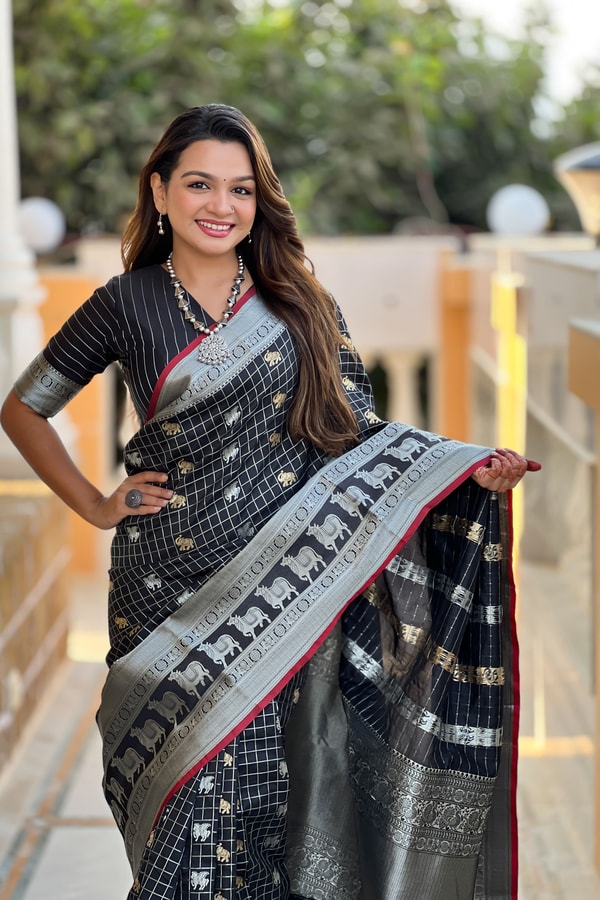
- Festive and wedding guests. Banarasi soft silk sarees with zari borders and rich pallus.
- Office and daily wear. Lighter cotton silk sarees that a working woman will wear every week, not once a year.
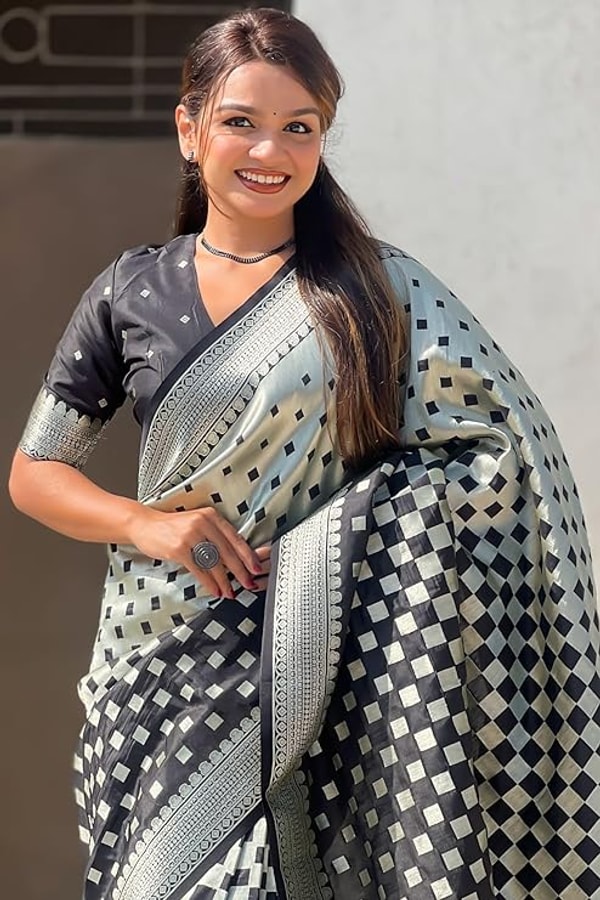
- Younger buyers and parties. Designer sarees with bold motifs and contrast blouses that stand out in a reel.
Pick the one that matches the people you already know: your society, office and community WhatsApp groups. Your first customers will most likely come from there.
Your first order: start small, from 20 pieces in all
For a first order, take 8 to 10 designs, 2 to 4 pieces each, in the colours your followers like. That is 20 to 40 sarees: enough variety for your feed, small enough that a slow design does not sink you.
Our minimum is 20 pieces in the whole order, any designs and colours; tell our team the pieces you want of each and they will confirm stock. Mixing colours protects you: if red sells and lime yellow does not, you are left with a few slow pieces, not twenty.
Why so many first-time buyers ask for 1 piece
Among buyers who wrote a quantity, "1 piece" was the most common answer. The chart shows the five quantities written most often in our 5,048 wholesale enquiries from April 2025 to October 2026.
| Quantity asked | Buyers |
|---|---|
| 1 piece | 43 |
| 10 pieces | 36 |
| 20 pieces | 13 |
| 50 pieces | 21 |
| 100 pieces | 22 |
A buyer who asks for one piece usually wants to check the quality before spending more. MOQ, or minimum order quantity, is the smallest order a manufacturer takes. Some count it per design; we count the whole order, 20 pieces. It makes the wholesale price possible: packing, billing and dispatch take about the same work for one saree as for twenty.
To check quality first, ask us for a daylight video of the exact design, or visit our factory in Surat. Then start with a first order of 20 pieces across the designs you like.
What to ask a manufacturer before you pay
Ask these on WhatsApp so the answers are in writing.
| Ask | Why it matters |
|---|---|
| Is the MOQ per design or per order, and can I mix? | Decides how many designs your budget covers |
| Fabric, saree length, blouse piece, weight | Your customers will ask. Our Banarasi soft silk pages list 5.5 metres with a 0.8 metre unstitched blouse piece |
| Can I use your photos and videos? | Saves time while you shoot your own |
| Will I get a GST invoice? | Needed for your accounts. Every order from us has one |
| Payment methods and dispatch date | Plan your launch around the arrival |
| What if a piece arrives damaged? | Know the time limit and the proof needed before it happens |
| Can I reorder the same design later? | Your bestseller is only useful if you can restock it |
Photos and your catalogue
Your photos are your shop. Online, the customer cannot touch the saree, so photos must show the true colour, the border, the pallu and the fall.
- Shoot in daylight, without filters. A colour that looks different in person leads to returns.
- Take two kinds of photo. A flat-lay of the folded saree shows the weave and border; a draped shot shows the fall.
- Add close-ups of the pallu, the border and the blouse piece.
- Make one WhatsApp catalogue per range with fabric, length, colours and your price.
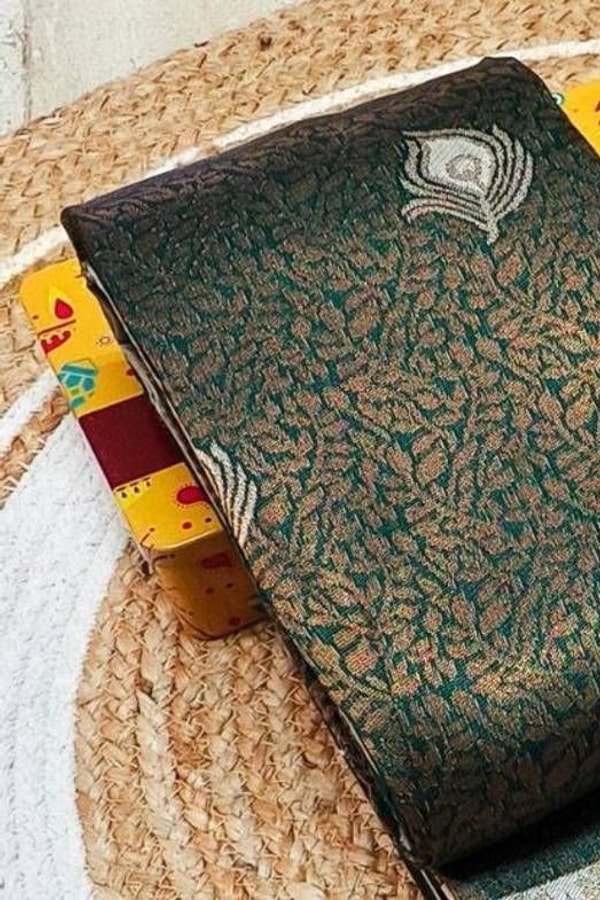

From our factory: open every saree fully once before you photograph it. A weaving fault or a stain is easier to catch on your table than after a customer finds it.
GST basics for a home saree business
In plain terms, you generally need GST registration once your yearly turnover crosses the limit set in the GST law, and in some cases earlier, for example for certain sales to customers in other states or through online marketplaces. The limits and rules change, so check with a chartered accountant (CA) before your first sale. Registration is done on the official GST portal.
Once registered, share your GSTIN when you order so our GST invoice is in your business name. Your CA will explain input tax credit and how to charge GST to your customers.
Pricing your margin: a worked example
Price from your landed cost: everything it takes to put one saree in a customer's hands. The numbers below are made up and rounded to show the method. They are an example only, not our prices.
| Cost per saree (example only) | Amount (₹) |
|---|---|
| Purchase price | 1,000 |
| Freight from the manufacturer, per saree | 50 |
| Packing: cover, box, tape | 30 |
| Photos and ads, per saree | 70 |
| Shipping to the customer, if you offer it free | 100 |
| Returns and damage allowance | 50 |
| Landed cost | 1,300 |
To keep 30% of the selling price, divide the landed cost by 0.7: ₹1,300 ÷ 0.7 is about ₹1,860, so you might price it at ₹1,899. That leaves ₹599 per saree.
Know the difference between margin and markup: here, ₹599 is a 46% markup on cost but a 31% margin on the selling price. Mixing them up leads to prices that leave nothing after ads and returns. If you are GST-registered, work out the tax part with your CA.
Startup budget: an example
Your biggest cost should be stock. Here is a sample first-month budget, again with made-up round numbers, not our prices.
| Item (example only) | Amount (₹) |
|---|---|
| First stock: 3 designs × 20 pieces × ₹1,000 | 60,000 |
| Freight from Surat | 3,000 |
| Packing material for about 60 orders | 2,000 |
| Phone tripod, light and plain backdrop | 3,000 |
| Ads and boosted posts, first month | 5,000 |
| Reserve for returns and damage | 5,000 |
| Total | 78,000 |
Add your CA's fee. Then replace every line with real figures: our quote for the stock, your transporter's quote and your real ad budget.
Returns and damaged pieces
Decide your returns rule before your first sale and post it in your Instagram highlights.
- Ask customers for an unboxing video and accept damage claims only with one.
- Record your own unboxing when stock arrives from the manufacturer. Count pieces against the invoice.
- Agree the manufacturer's rule in advance: how transit damage and faults are handled, and how many days you have to report them.
- Offer exchange before refund where you can. It keeps the sale.
Your launch, step by step
Here is the whole plan, from niche to reorder, in eight steps.
- Choose your niche One customer, one occasion, one price band.
- Shortlist 3 or 4 designs Save the product links from our site.
- Ask your questions Use the table above and get a quote on WhatsApp.
- Order 20 pieces or more Mix designs and colours.
- Check on arrival Record the unboxing and open every saree.
- Shoot and catalogue Flat-lay, drape and close-ups in daylight.
- Price and post Price from landed cost, then share in your groups.
- Reorder what sells Drop the slow designs, repeat the fast ones.
Ready to choose your first designs? Send us the product links on WhatsApp at +91 99131 40434, or contact our sales team. Selling festive sarees? Our guide to Banarasi soft silk helps you describe them.
Frequently asked questions
Can I start a saree business from home with a small budget?
Yes. Most of your money goes into the first stock, so keep it small: 20 to 40 pieces across several designs. Shoot on your phone in daylight, sell on Instagram and WhatsApp, and keep a reserve for returns. Grow the range once you know what sells.
Can I buy just one saree to check the quality?
Our wholesale minimum is 20 pieces in the whole order, so we do not sell a single piece on its own. To check quality first, ask us for a daylight video of the exact design on WhatsApp, or visit our factory in Surat. A sensible start is 20 pieces across a few designs, then more of what sells.
Can I mix designs and colours within the 20-piece minimum?
Yes. The minimum counts the whole order, so the 20 pieces can be any designs and colours. Tell our team how many pieces you want of each and they will confirm stock. Spreading a first order across several designs and colours is a sensible way to learn what your customers prefer.
Do I need GST registration to sell sarees on Instagram?
It depends on your turnover and how and where you sell. Registration is generally needed once your turnover crosses the limit in the GST law, and earlier in some cases, such as certain sales to other states or through online marketplaces. The rules change, so ask a chartered accountant before your first sale.
Which sarees should a beginner start with?
Start with the occasion your customers already shop for. For festive and wedding buyers, Banarasi soft silk with zari borders is a safe first range. For working women, try lighter cotton silk sarees. Buy a few designs in mixed colours and let the first sales guide your reorder.
What should I do if a customer says the saree arrived damaged?
Ask for the unboxing video and photos of the damage, then offer an exchange or refund as your stated policy says. To protect yourself, record your own unboxing when stock arrives from the manufacturer and agree in advance how they handle transit damage. A clear written rule makes these cases easier to settle.