Quick answer
- Place your main order for the November to February season in September or early October, and for the April to May season in February or early March. Custom colours need the earliest order.
- Split your stock three ways: a small bridal corner, a large block of wedding guest sarees, and a steady supply of gifting sarees for relatives.
- At a 20-piece minimum per design, spread the 20 pieces across four or five colours of one design instead of taking 20 pieces in one colour.
- Keep about a third of your season budget for reorders of the designs that actually sell.
- Shops ask about stock before the season, not during it: in 2025 our enquiries were lowest in December.
A saree shop should buy its wedding season stock before the season starts, not when the first bride walks in. For the November to February season that means placing the main order in September or early October, receiving it in October, and keeping money aside for reorders in December and January. The April to May season follows the same pattern about two months earlier: order in February or early March.
What you buy matters as much as when. Most of your sales will be sarees for wedding guests and family gifts, not bridal sarees, so the bridal corner should be the smallest part of your order. This is how we explain it to retailers who visit our factory in Surat, with our own enquiry records to show when shops actually buy.
When do saree shops order for the wedding season?
Shops that sell well in the wedding season order two to three months before it. In our 2025 records (the enquiries that carry a date), enquiries stayed between 101 and 129 a month from May to October, then fell to 102 in November and 77 in December, the lowest month of the year. By the time weddings are running, most shops have already bought.
| Month | Enquiries |
|---|---|
| May 2025 | 129 |
| June 2025 | 115 |
| July 2025 | 122 |
| August 2025 | 111 |
| September 2025 | 101 |
| October 2025 | 126 |
| November 2025 | 102 |
| December 2025 | 77 |
This is one year of one manufacturer's enquiries, and fairly flat until the end. Still, October, just before the season, was our second busiest month, and December was by far the quietest. If you are still choosing designs in December, you are buying late.
Wedding dates shift every year and by community, so count back from the first busy week for your own customers.
A season timeline from order to clearance
Work backwards from the first wedding week in your area. For the November to February season:
- July to August: review last season List what sold out, what is still on the shelf and which colours customers asked for. Fix your budget.
- August to September: shortlist designs Save product links, ask for photos and daylight videos on WhatsApp, or visit the factory.
- September to early October: place the main order Confirm designs, colours per design and the dispatch date. Custom colours first.
- October: receive and display Check every piece against the invoice and set up the bridal corner.
- Late November to December: reorder Reorder the designs that are moving, in the colours that sold.
- January: last top-up Proven sellers only. No new heavy designs this late.
- February: clear and plan ahead Clear slow movers and order for the April to May season.
Ready designs in stock dispatch faster than a custom colour, which has to be made. Ask us for the dispatch date when you order, and add transport time to your city before you count on the stock being on your shelf.
What mix of sarees should you stock?
Put most of your money into wedding guest sarees, less into gifting sarees, and the least into heavy bridal pieces. Every wedding has one bride but many guests and relatives, and that is where the volume is. Adjust this starting point with your own sales from last season.
| Segment | What it is | Starting share of your order | Colours that usually move | Our ranges to look at |
|---|---|---|---|---|
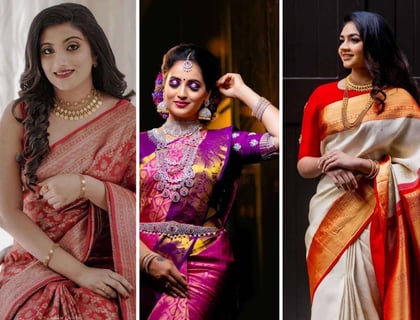
| Bridal and heavy | Heavy zari, rich pallu, all-over brocade, contrast temple borders | 15 to 25% | Red, maroon, magenta, purple, with gold zari | Wedding, Kanchipuram-style, heavy Banarasi soft silk |
| Wedding guest wear | Banarasi soft silk with butta or jaal, light enough for a long function | 45 to 55% | Navy, bottle green, wine, grey and pastels, with gold, silver or copper zari | Banarasi soft silk, designer, fancy, traditional |
| Gifting and family | Sarees families buy several at a time for relatives | 25 to 35% | Cream, off-white and light shades, copper and silver zari | Cotton silk, traditional, lighter soft silk |


Bridal and heavy sarees
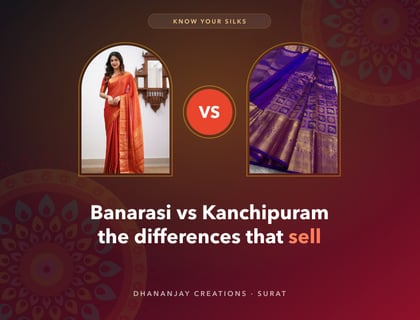
Bridal sarees sell one at a time, after long decisions, and tie up the most money per piece. Keep the corner small but complete: a few designs in several colours each. Our wedding sarees and Kanchipuram-style sarees are where most shops start. For South Indian weddings, give more of this corner to contrast temple borders; for North and West Indian weddings, heavy Banarasi brocade usually moves faster. Our guide to Banarasi vs Kanchipuram sarees explains the difference.
Wedding guest sarees
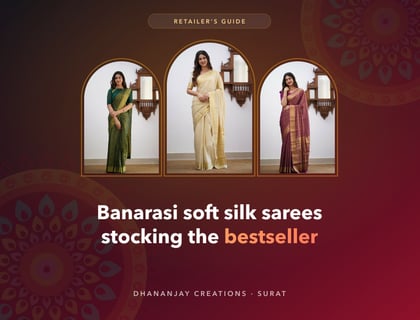
This is the largest and fastest part of the season. Guests want a saree that looks rich in photos but is comfortable for hours, which is why Banarasi soft silk sarees are the backbone of most wedding stock. Spread your colours: jewel tones for evening functions, pastels and greys for the day, and a mix of gold, silver and copper zari so repeat customers see something new.
Gifting sarees
In many families, both sides give sarees to relatives, and one family can buy several pieces in a single visit. These buyers want sarees that look good in a gift box and suit women of different ages. Our cotton silk sarees and lighter traditional designs fit here, in light and mid shades.
From our factory: Before you confirm a bridal colour, ask us for a short video of the saree in daylight. Reds, maroons and magentas look different on a phone screen than in hand, and a bride's family will hold the saree up to the light at your counter.
How many pieces per design should you order?
At our minimum of 20 pieces per design, the best use of those 20 pieces is usually four or five colours of one design, four or five pieces each. Customers often choose a colour before a design, and one design in several shades gives your shelf variety without multiplying the designs you manage. Tell us how many pieces you want in each colour and our team will confirm the mix.
Here is a worked example, in pieces rather than rupees, for a shop planning to sell about 300 sarees in the main season:
| Part of the plan | Designs | Pieces |
|---|---|---|
| Bridal and heavy, main order | 2 designs at 20 pieces | 40 |
| Wedding guest, main order | 5 designs at 20 pieces | 100 |
| Gifting, main order | 3 designs at 20 pieces | 60 |
| Kept back for reorders, December and January | About 5 designs at 20 pieces | 100 |
| Season total | 300 |
Your numbers will differ, but the shape holds: two thirds ordered before the season, one third kept for designs that prove themselves.
When a design sells out, reorder that exact design rather than something similar. Because we manufacture our own designs, a sold-out design can usually be made again. Send us the product link and the colours that sold. Reorder in late November or early December; a reorder placed in late January often arrives when the season is nearly over.
How to manage cash flow through the season
Do not spend your whole budget on the first order. Keep about a third back for reorders, and put the smallest share into bridal pieces, which sell slowest.
- Order in two lots. A main order in September or October and a reorder in late November or December spreads your payments across the season.
- Fewer designs, more colours. Ten designs in five colours each sell through more easily than fifty designs in one colour, and leave less dead stock.
- Plan the end of the season. Lighter guest and gifting designs carry over into April and May; heavy bridal pieces carry over less well, so clear them in February.
Every order comes with a GST invoice, and we accept UPI, NEFT, RTGS, PayPal, Visa and Mastercard, and cheques. If this is your first order from us, our guide to buying sarees wholesale from a Surat manufacturer covers quotes, payment and dispatch.
What to stock for the April to May season
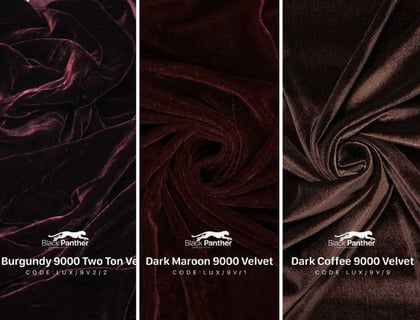
The April to May season is shorter and hotter, so stock lighter sarees and a smaller bridal corner. Soft silk with butta work, cotton silk and pastel shades sell better than heavy brocade in the heat. Shops that also sell lehengas or stitch blouses can add velvet fabric to the same order, from 100 metres per quality.
Frequently asked questions
When should a saree shop order stock for the November to February wedding season?
Place the main order in September or early October so the stock reaches you in October, before the first wedding week. Order custom colours first because they have to be made. Keep part of your budget for a reorder in late November or December, when you know which designs are selling.
How many pieces per design should I order for the wedding season?
Our minimum is 20 pieces per design. For most shops the best use of those 20 pieces is four or five colours of one design, four or five pieces each. Take 20 pieces of a new design first, and reorder the designs that sell out in the first weeks of the season.
What share of wedding stock should be bridal sarees?
For most shops, 15 to 25 percent is a sensible starting point. Bridal sarees sell one at a time and tie up the most money per piece, while guest wear and gifting sarees sell in larger numbers. Adjust the share with your own sales from last season and the customers your shop serves.
Which saree colours sell best in the wedding season?
In our experience, red, maroon, magenta and purple with gold zari lead in bridal wear. For guests, jewel tones such as navy, bottle green and wine sell for evening functions, and greys and pastels for day functions. Gifting customers usually choose cream, off-white and light shades with copper or silver zari.
What should I stock for the April to May wedding season?
Stock lighter sarees, because the season falls in the hot months. Soft silk with butta work, cotton silk and pastel shades sell better than heavy brocade. Keep the bridal corner smaller than in winter and place the order in February or early March so it reaches you in time.
Planning your season order? Contact our sales team or message us on WhatsApp at +91 99131 40434 with the designs you like, and we will confirm colours, quantities and the dispatch date.